Guide · Renewable energy in Albania
Renewable energy, step by step
What the law and the tariffs say, how much the sun makes in your city and how to choose the equipment. Every figure has its source; where we do not know something, we say so.
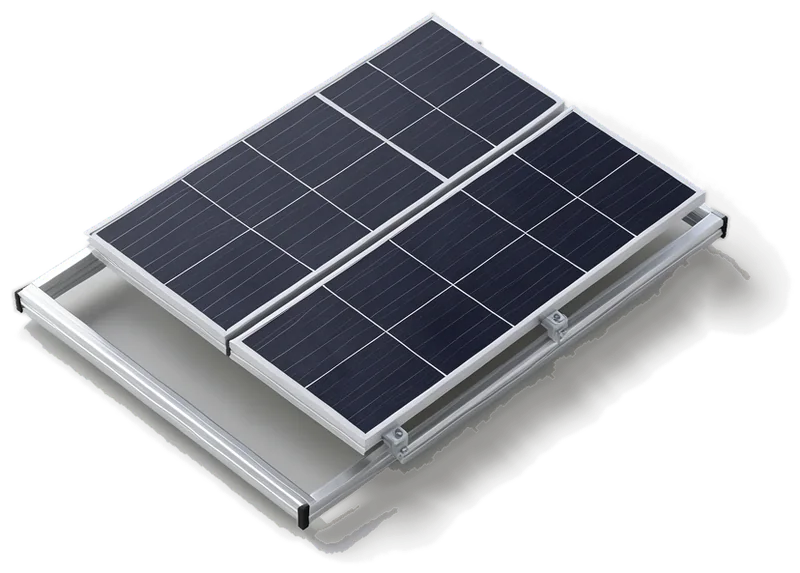
AI-generated illustration · not a photo
- Sections
- 06
- Questions
- 10
- Sources
- 53
- Read on
- 23 October 2026
Albania’s electricity today
Most of the electricity made in Albania comes from hydropower plants, so output swings a lot from one year to the next: when little rain falls the country imports, and when a lot falls it exports.
Solar is catching up fast. Photovoltaic plant capacity grew from 21 MW in 2020 to 631 MW at the end of 2025, and 13 solar plants with 182 MW were added in 2025 alone. Wind does not produce yet: no wind farm was in operation at the end of 2025.
The generation shares below are INSTAT’s; capacity and the dry-year figures are ERE’s. The two count solar plants differently, so their figures should not be added together.
86.8%
of the electricity generated in Albania in 2025 came from hydropower and 13.2% from other renewable producers. In 2024 hydro’s share was 93.5%.
Source: INSTAT, electricity balance 2025
21 → 631 MW
of photovoltaic plant capacity from 2020 to the end of 2025: about 18% of the 3,475 MW of all the country’s power plants.
4,174 / 8,076 GWh
generated in a dry year (2017) and in a wet one (2018): output almost doubled from one year to the next.
−21%
was the inflow to the Fierza reservoir (Drin cascade) in 2025, against its 30-year average.
Source: ERE, Annual Report 2025, p. 13
3,375 GWh
of electricity were imported in 2025; after exports, net imports were 877 GWh.
Source: INSTAT, electricity balance 2025; Also: ERE, Annual Report 2025, p. 78
0 MW
of wind power in operation at the end of 2025. The first wind generation licence (3 MW) was granted that same year.
Source: ERE, Annual Report 2025, p. 126
46.6% → 54.4%
of gross final energy consumption came from renewable sources in 2023; the law targets 54.4% by 2030. This covers all energy, not only electricity.
Source: European Environment Agency, 2025; Also: Law 24/2023, Art. 6
Becoming a self-producer
A self-producer is a household, business or institution that generates renewable energy for its own use. Law 24/2023 (Article 20) gives self-producers the right to generate, consume, store and sell their surplus, with a plant of up to 500 kW.
500 kW is the ceiling, not your entitlement. Your consumption sets the size: Instruction 3/2019 works it out from your yearly use over the last two years (or from an energy audit), at 1,400 kWh a year per kWp anywhere in the country. OSHEE may disconnect a plant designed to produce more than the customer’s yearly use.
The steps below are those of Instruction 3/2019 and of the document checklist OSHEE published in November 2023. The instruction was issued under the old law (7/2017) and stays in force until the new by-laws are adopted (Law 24/2023, Art. 31). According to pv magazine, rules issued in May 2026 set the connection and compensation procedure for self-producers under net billing. We have not read those rules, so ask the grid operator (OSSH) which procedure and which documents it asks for today.
The steps under Instruction 3/2019 and OSHEE’s checklist
Gather the last two years of bills: yearly consumption is the basis for sizing. An energy audit can be submitted instead.
A licensed designer draws up the project and the technical report. OSHEE’s checklist asks for the designer’s licence (category 10C) and the installer’s (NP-10).
Get the municipality’s permit for works with a prior declaration (DCM 408/2015). The plant goes on your own building.
Submit the request to OSSH with: the average yearly consumption declaration or the audit, the project, the two-way meter proposal, the technical report, the inverter and production-meter data, the designer’s licence, the municipal permit, your ID card and your existing contract number, with nothing left unpaid.
OSSH answers within 30 working days. If a document is missing it tells you within 5 days, and you have 10 days to complete it.
After approval you have 6 months to install. Two meters go in, at your cost: a smart two-way meter at the grid connection and a production meter after the inverter.
Source: Ministry of Infrastructure and Energy, Instruction 3/2019, points 2, 4, 6, 7, 8 and 13; Also: OSHEE, documents for a self-producer PV plant (2023)
What happens to your surplus
- Instruction 3/2019 (point 3) nets production against use every month. Energy above the month’s use was to be sold to the Universal Service Supplier (FSHU) once a price method was approved; until then, under point 17, the surplus passes to FSHU without payment.
- Law 24/2023 moves to net billing: ERE sets the price of energy fed into the grid, and it must reflect that energy’s market value (Art. 20). Article 20 applies from 1 January 2024 (Art. 30).
- In March 2026 ERE wrote that the draft decision on the price method, with a price cap and a price floor for self-producers, was in final approval. Whether it was adopted since, we have not verified.
- The May 2026 rules set the compensation procedure under net billing (pv magazine). For those rules we have not yet found a published price in lekë/kWh for the energy you feed into the grid.
Source: Ministry of Infrastructure and Energy, Instruction 3/2019, points 3 and 17; Also: pv magazine, 27 Aug 2026
What to ask an installer
General guidance, not a legal rule- Which procedure they will follow with OSSH (Instruction 3/2019 or the May 2026 rules) and who submits the documents.
- Their licences: the designer’s (10C) and the installer’s (NP-10), as OSHEE’s checklist requires.
- How they sized the plant: from your two years of use, at how many kWh per kWp for your city and roof, and whether it exceeds your yearly use.
- The datasheets of the panels, the inverter and the battery, and whether the battery works with the inverter (high voltage or 48 V).
- What the price includes: mounting, cables and connectors, the DC isolator and protection devices, both meters, the project, installation, permits and the OSSH application.
- Written warranties: product and performance warranties for the panels, the inverter’s, the battery’s and the installation work’s, and who handles claims.
- How you will see production (monitoring) and who maintains the plant.
- The timeline: when the request is filed, when OSSH’s answer is due and when the plant goes in.
500 kW
is the legal cap for a self-producer’s plant, home or business; the size follows yearly use and is approved by the grid operator.
Source: Law 24/2023, Art. 20; Also: Ministry of Infrastructure and Energy, Instruction 3/2019, points 4, 6 and 15
3,551
self-producers existed at the end of 2025: 2,377 non-household, 1,089 households, 69 public institutions and 16 non-budgetary institutions.
1,135
of 1,261 applicants were approved as self-producers by the grid operator in 2025, 27.96% more than in 2024.
Source: ERE, Annual Report 2025, p. 226
30 working days
is the grid operator’s deadline to answer a request under Instruction 3/2019; after approval, the plant must be installed within 6 months.
Source: Ministry of Infrastructure and Energy, Instruction 3/2019, points 8 and 13
Not verified
We do not know whether netting is done monthly today (Instruction 3/2019) or yearly (Law 24/2023, Art. 30(9)), nor whether the May 2026 rules changed the deadlines and documents above.
Source: Law 24/2023, Art. 30(9); Also: pv magazine, 27 Aug 2026
Our assumption
So in the calculator we count surplus energy at 0 lekë. Energy you use yourself is worth the tariff you no longer pay.
Source: Ministry of Infrastructure and Energy, Instruction 3/2019, point 17
Not verified
According to pv magazine, Law 59/2026 on the power sector entered into force in July 2026 and recognises “active clients” who generate, consume, store and sell electricity. How this affects self-producers we have not checked in the law itself.
Source: pv magazine, 27 Aug 2026
Electricity tariffs in 2026
ERE sets the prices of the Universal Service Supplier (FSHU), which supplies households and businesses connected at low voltage (0.4 kV). From 1 January to 31 December 2026, ERE Decision no. 322 of 15 December 2025 applies. Businesses connected at 35 kV or 20/10/6 kV buy on the free market or from the supplier of last resort, not at these prices.
For households, 700 kWh a month is not a band but a cliff: once the month passes 700 kWh, the whole month is billed at 9.5 lekë/kWh, from the first kilowatt-hour. So every kWh that keeps the month under 700 is worth far more than the tariff.
Peak hours apply only where ERE’s table gives a peak price: businesses at 0.4 kV and EV charging points. Households have no peak price.
8.5 lekë/kWh
is what households using up to 700 kWh a month pay.
9.5 lekë/kWh
above 700 kWh a month, on the whole month’s consumption (“për të gjithë sasinë e konsumuar gjatë një muaji”, ERE’s footnote).
87%
of household customers use less than 700 kWh a month, according to ERE.
Source: ERE, Annual Report 2025, p. 136
14 lekë/kWh
is what businesses connected at 0.4 kV pay; 16.1 lekë/kWh at peak hours.
22 lekë/kWh
is what charging points and stations above 11 kW at 0.4 kV pay from 1 November 2025 (25.3 at peak hours); a home charger up to 11 kW stays on the customer’s normal price.
Source: ERE, tariffs for 2026 (Decision 322/2025); Also: ERE, Annual Report 2025, pp. 19 and 137
18–22 · 19–23
are the peak hours: 18:00–22:00 from 1 November to 31 March, 19:00–23:00 from 1 April to 31 October.
23.5 lekë
is what each of the 50 kWh that take a household from 700 to 750 kWh costs: 5,950 lekë become 7,125 lekë, excluding VAT.
Our arithmeticSource: ERE, tariffs for 2026 (Decision 322/2025)
Our assumption
ERE’s notice of 8 January 2025 gives the household prices, 8.5 and 9.5 lekë/kWh, as “pa TVSH” (excluding VAT). The 2026 table repeats the same values without saying, and we assume the same basis. With 20% VAT they become 10.2 and 11.4 lekë/kWh (our arithmetic). Check it on an OSHEE bill.
Source: ERE, board meeting notice, 8 Jan 2025; Also: ERE, tariffs for 2026 (Decision 322/2025)
Solar yield by city
The figures come from PVGIS 5.3 by the European Commission’s Joint Research Centre (JRC): how many kWh 1 kWp of panels makes in a year in the city centre, at the best tilt and orientation, with 14% losses in cables, inverter and dirt, averaged over 2005–2023. The model includes the mountain horizon, one reason why Tirana, with Mount Dajti to its east, makes less than Durrës.
For a plant’s output, multiply the city’s figure by the panels’ power in kWp: 5 kWp in Tirana give about 5 × 1,435 = 7,175 kWh a year. Output varies by about 4% from year to year, and December gives about half of July.
The roof matters more than the city. In Tirana a 30° south-facing roof makes almost as much as the best tilt; if the panels sit flush with the roof, with no air behind them, they run hotter and make about 4% less. On a flat roof, panels at 10° facing east and west make about 16% less per kWp.
Instruction 3/2019 uses 1,400 kWh/kWp for every area when it sizes a self-producer’s plant. PVGIS gives more than that in 10 of the 14 cities, and slightly less in Korçë, Pogradec, Gjirokastër and Kukës.
| City | kWh/kWp a year | Best tilt | Facing | December | July |
|---|---|---|---|---|---|
| Fier | 1,521 | 35° | south | 86 | 167 |
| Durrës | 1,517 | 36° | +1° | 81 | 169 |
| Sarandë | 1,500 | 34° | +2° | 81 | 168 |
| Lushnjë | 1,494 | 36° | −1° | 85 | 164 |
| Vlorë | 1,489 | 35° | −1° | 81 | 166 |
| Lezhë | 1,474 | 36° | +3° | 79 | 166 |
| Elbasan | 1,451 | 36° | −5° | 84 | 161 |
| Berat | 1,448 | 35° | −10° | 81 | 163 |
| Tirana | 1,435 | 36° | −4° | 82 | 161 |
| Shkodër | 1,428 | 36° | south | 77 | 162 |
| Gjirokastër | 1,384 | 34° | −16° | 71 | 162 |
| Pogradec | 1,379 | 34° | −13° | 64 | 162 |
| Korçë | 1,371 | 34° | −8° | 70 | 157 |
| Kukës | 1,358 | 35° | −6° | 64 | 159 |
| Roof | Tilt | Facing | kWh/kWp a year | Against the best |
|---|---|---|---|---|
| Best tilt, ventilated frame | 36° | south (−4°) | 1,435 | 0% |
| Pitched roof 30°, panels ventilated at the back | 30° | south | 1,429 | −0.5% |
| Pitched roof 30°, panels flush with the roof | 30° | south | 1,369 | −4.6% |
| 4.2% less than the same roof with ventilated panels: with no air behind them, the panels run hotter. | ||||
| Flat roof, 10° | 10° | south | 1,321 | −7.9% |
| Flat roof, 10°, half east and half west | 10° | east–west | 1,209 | −15.8% |
| Mean of two PVGIS runs, east (1,213.96) and west (1,203.46). | ||||
| Horizontal (0°) | 0° | — | 1,220 | −15.0% |
Sources: PVGIS 5.3, JRC (Tirana, best tilt); PVGIS 5.3, JRC (Tirana, 30° south, ventilated panels); PVGIS 5.3, JRC (Tirana, 30° south, panels flush with the roof); PVGIS 5.3, JRC (Tirana, 10° south); PVGIS 5.3, JRC (Tirana, 10° east); PVGIS 5.3, JRC (Tirana, 10° west); PVGIS 5.3, JRC (Tirana, 0°)
1,521 kWh
a year per kWp in Fier, the highest of the 14 cities; Kukës gives the least, 1,358 kWh.
Source: PVGIS 5.3, JRC (European Commission) (Fier); Also: PVGIS 5.3, JRC (European Commission) (Kukës)
1,435 kWh
a year per kWp in Tirana, tilted 36° to the south. 82 kWh in December, 161 kWh in July.
≈ 4%
is how much output varies from one year to the next: the standard deviation is 52–66 kWh per kWp a year depending on the city, from 52 in Pogradec to 66 in Elbasan.
Our arithmeticSource: PVGIS 5.3, JRC (European Commission) (Pogradec); Also: PVGIS 5.3, JRC (European Commission) (Elbasan)
−4%
is what panels flush with a 30° roof in Tirana make compared with ventilated panels on the same roof (1,368.56 against 1,428.52 kWh/kWp).
Our arithmeticSource: PVGIS 5.3, JRC (Tirana, 30° south, panels flush with the roof); Also: PVGIS 5.3, JRC (Tirana, 30° south, ventilated panels)
−16%
per kWp is what a flat roof with 10° east–west panels gives in Tirana, compared with the best tilt (1,208.71 against 1,435.3 kWh/kWp).
Our arithmeticSource: PVGIS 5.3, JRC (Tirana, 10° east); Also: PVGIS 5.3, JRC (Tirana, 10° west)
General guidance, not a legal rule
Tirana’s roof ratios can be used as an approximation for other cities: e.g. a 10° east–west flat roof gives about 0.84 times the best-tilt yield. It is an approximation, not a PVGIS run for that city.
Source: PVGIS 5.3, JRC (Tirana, 10° east); Also: PVGIS 5.3, JRC (Tirana, 10° west)
General guidance, not a legal rule
On a flat roof, low east–west panels are usually placed closer together, so more kWp fit on the same area. Ask the installer for a roof layout with the shading.
Not verified
PVGIS does not model panel ageing. The median of field measurements is a 0.5% loss a year.
Source: PVGIS user manual (JRC); Also: Jordan & Kurtz, NREL, 2013
Choosing the equipment
Most figures in this section come from the datasheets of products in our catalogue and show how far models differ. Rules that do not come from a datasheet or a law are marked as general guidance: your installer decides for your plant.
Solar panels
Rated power (Wp) is the panel’s output under standard test conditions; efficiency tells you how much it makes per square metre. Two panels with the same power can differ in size. To compare prices, look at the price per Wp.
What to compare
General guidance, not a legal rule- Efficiency: the higher it is, the less roof you need for the same power. It matters when the roof is small.
- Cell technology: TOPCon (N-type, the most common in the catalogue), HJT (heterojunction) and ABC/back-contact, where all the electrical contacts sit on the back of the cell.
- Bifacial: the panel also takes in light from the back. It gains most over light surfaces or on raised frames, least when it sits flush with the roof.
- Temperature coefficient (Pmax): the percentage of power the panel loses for every degree above 25 °C. The closer to zero, the better in summer.
- Two different warranties: the product warranty covers defects; the performance warranty states how much power the panel must still have after 25 or 30 years.
- Area: one supplier counts about 6.5 m² of roof per kWp.
Source: Memodo, independence calculator
22.3–24.8%
is the efficiency range of the panels in the catalogue, from REC Alpha Pure-R (HJT) to Jinko Tiger Neo 3.0 (TOPCon).
Source: Jinko Tiger Neo 3.0 670 Wp, datasheet; Also: REC Alpha Pure-R 430 Wp, datasheet
−0.24 … −0.29 %/°C
is the temperature coefficient range in the catalogue: −0.24 for REC’s HJT panel, −0.29 for some TOPCon panels such as Trina Vertex N.
Source: REC Alpha Pure-R 430 Wp, datasheet; Also: Trina Vertex N 650 Wp, datasheet
12 / 30 years
of product and performance warranty on the Jinko Tiger Neo 3.0, with 88.85% of power at the end. AIKO Neostar 3S54 gives 25 years of product warranty.
Source: Jinko Tiger Neo 3.0 670 Wp, datasheet; Also: AIKO Neostar 3S54 475 Wp, datasheet
up to 15 °C
hotter is how much panels with restricted rear airflow can run, at 1,000 W/m² of sunlight.
Source: PVGIS user manual (JRC)
0.5% a year
is what panels lose to ageing, the median of about 2,000 field measurements.
Source: Jordan & Kurtz, NREL, 2013
The inverter
The inverter turns the panels’ direct current (DC) into alternating current (AC) for the house and the grid. A grid-tied (on-grid) inverter works with panels only; a hybrid inverter also connects to a battery.
What to check
General guidance, not a legal rule- Phases: a single-phase inverter for a single-phase connection, three-phase for three-phase. Check your contract or ask OSHEE if you are unsure.
- Sizing: the limit that counts is the “max PV power” on the datasheet. Our calculator and packages ask for an inverter with AC power of at least 70% of the panels’ power.
- MPPT: each MPPT tracks one string of panels separately. Two MPPTs help when the panels face two ways, e.g. east and west, or when part of them is shaded.
- Hybrid or “battery ready”, if you may add a battery later.
- European efficiency is closer to everyday use than peak efficiency.
10 kW → 15 kWp
of panels is the maximum many 10 kW inverters in the catalogue accept, e.g. SMA Sunny Tripower 10.0 and Huawei SUN2000-10KTL-M1.
Source: SMA Sunny Tripower 10.0, datasheet; Also: Huawei SUN2000-10KTL-M1, datasheet
5 kW · 7.5 kWp
are the AC power and max PV power of the Fronius Primo GEN24 5.0 Plus, a single-phase hybrid inverter.
97.0–98.4%
is the European efficiency range of the inverters in the catalogue, from Deye SUN-10K to Huawei SUN2000-30KTL-M3.
Source: Deye SUN-10K-SG04LP3-EU, datasheet; Also: Huawei SUN2000-30KTL-M3, datasheet
5 → 10 years
of warranty on the SMA Sunny Tripower 10.0: 5 years as standard, 10 years free with registration, 15 years as an option.
The battery
A battery stores the panels’ energy for the evening and the night. Compare usable capacity, not nominal capacity: usable capacity is how many kWh you actually get.
What a battery is worth depends on the price you get for surplus. Until that price is known, we count surplus that is not stored at 0 lekë.
What to check
General guidance, not a legal rule- Voltage: a high-voltage battery needs a high-voltage hybrid inverter, and a 48 V battery a 48 V hybrid. A matching voltage is not enough: only the makers’ compatibility lists say which pairs work.
- Depth of discharge (DoD): what share of the capacity can be used without harming the battery.
- Cycle life: not every datasheet gives it; when it is missing, ask for the written warranty.
- Continuous discharge power (kW): how many appliances the battery can run at once.
- Modularity: how far you can extend it later (minimum and maximum system capacity).
- Unbound Solar’s sizing formula: kWh needed = daily kWh ÷ DoD. For a grid-tied plant, put the kWh you use in the evening and night in place of the daily kWh (our adaptation).
LFP
(lithium iron phosphate, LiFePO4) is the chemistry of all six batteries in the catalogue.
Source: Pylontech US5000, datasheet; Also: BYD Battery-Box Premium HVS 10.2, datasheet
4.56 of 4.8 kWh
are usable on the Pylontech US5000, a 48 V battery with 95% depth of discharge and 6,000 cycles per the datasheet (the maker’s web page says 8,000).
Source: Pylontech US5000, datasheet
409.6 V
is the nominal voltage of the BYD Battery-Box Premium HVS 10.2: a high-voltage battery, 10.24 kWh, 10-year warranty.
48 V
is the battery voltage the Deye SUN-10K-SG04LP3-EU works with: a three-phase low-voltage hybrid inverter.
General guidance, not a legal rule
The calculator and the packages pair a battery with an inverter only when at least one maker lists the pair as compatible and none excludes it (lists read on 27 October 2026); the page of each hybrid inverter and battery shows what it works with. The installer still sets the firmware, the communication link and the settings, and confirms the equipment list.
The heat pump
An air-to-water heat pump takes heat from the outside air and moves it into the heating and domestic hot water; some models also cool in summer. COP tells you how many kWh of heat it gives per 1 kWh of electricity at one test point; SCOP is the average over the whole heating season.
A7/W35 means outside air at 7 °C and water leaving the pump at 35 °C, a temperature suited to underfloor heating. With radiators that need hotter water, the pump runs less efficiently.
What to check
General guidance, not a legal rule- Heating capacity (kW): the house’s heat loss sets it. Ask the installer for the calculation rather than guessing.
- COP and SCOP at the water temperature you will use (35 °C or 55 °C).
- The refrigerant (e.g. R32 or R290), the number of phases and the outdoor unit’s sound power, in dB(A).
- Winter use: the pump adds kWh to the bill. If a month passes 700 kWh, the household’s whole bill is charged at 9.5 lekë/kWh.
COP 4.85
is what the Daikin Altherma 3 R 6 kW gives at A7/W35, with SCOP 4.47 in an average climate and class A+++.
Source: Daikin Altherma 3 R, datasheet
A+++ → A++
A+++ is the Vaillant aroTHERM plus range’s class with 35 °C water; with 55 °C water the VWL 75/6 model is class A++, with 133% seasonal efficiency.
Source: Vaillant aroTHERM plus VWL 75/6, datasheet; Also: Vaillant, aroTHERM plus page
The solar water heater
A thermosiphon solar water heater has a collector on the roof and a tank above it. Water warmed in the collector rises into the tank by itself, with no pump; an electric heating element helps on days without sun.
What to check
General guidance, not a legal rule- Tank volume (litres) and collector area (m²).
- The tank material, e.g. enamelled steel.
- The electric element’s power for sunless days.
- The filled weight: each litre of water weighs about 1 kg, so ask whether the roof can carry it.
151 L · 2.6 m²
are the tank and collector of the Calpak Mark-5 160/2.6, a thermosiphon system with a 3.5 kW electric element.
Source: Calpak Mark-5 160/2.6, datasheet
111,920 m²
of solar collectors had been installed in Albania in total according to the UNDP/GEF programme, around 2012 (the chart does not label the year).
Not verified
We found no current official count of solar water heaters in Albania.
Charging an electric car
ERE has a separate tariff for charging points and stations above 11 kW: 22 lekë/kWh, 25.3 at peak hours. A home charger up to 11 kW stays on your customer category’s price, e.g. 8.5 or 9.5 lekë/kWh for a household.
The chargers in the catalogue are 22 kW, three-phase and 32 A; the connector is Type 2 on those whose datasheet names it. Some switch by themselves between one and three phases to charge from the panels’ surplus.
11 kW or 22 kW
General guidance, not a legal rule- Power ≈ phases × 230 V × current: 1 phase at 32 A ≈ 7.4 kW; 3 phases at 16 A ≈ 11 kW; 3 phases at 32 A ≈ 22 kW.
- For 11 kW or 22 kW you need a three-phase connection.
- The car takes only as much as its own on-board (AC) charger allows: check the car’s specification before paying for 22 kW.
- With panels, choose a charger that can charge from solar surplus and limits its power when the house is under heavy load.
22 lekë/kWh
for charging above 11 kW from 1 November 2025, 25.3 at peak hours.
Source: ERE, tariffs for 2026 (Decision 322/2025); Also: ERE, Annual Report 2025, pp. 19 and 137
225
charging points were installed in 2025, 47 more than in 2024.
Source: ERE, Annual Report 2025, p. 18
1.38–22 kW
is the range the Fronius Wattpilot Flex Home 22 charges at from solar surplus, switching itself between one and three phases.
Not verified
Whether a 22 kW charger in a private home falls under the 22 lekë/kWh tariff, the documents we read do not say. Ask OSHEE before choosing 22 kW.
Frequently asked questions
Do I need a permit for rooftop panels?
Yes. Under Instruction 3/2019 a self-producer’s plant counts as works with a prior declaration (DCM 408/2015), so you need the municipality’s permit, and the grid operator (OSSH) must approve you as a self-producer. OSSH answers within 30 working days, and after approval you have 6 months to install.
Whether the May 2026 rules changed the procedure we have not verified: ask OSSH.
Source: Ministry of Infrastructure and Energy, Instruction 3/2019, points 2, 8 and 13; OSHEE, documents for a self-producer PV plant (2023); pv magazine, 27 Aug 2026
How big can my plant be?
The law allows up to 500 kW, but in practice as much as you use: Instruction 3/2019 sizes the plant from your yearly use over the last two years, at 1,400 kWh per kWp. For example, 350 kWh a month, i.e. 4,200 kWh a year, gives 3 kWp. OSHEE may disconnect a plant designed to produce more than the yearly use.
Our arithmeticSource: Law 24/2023, Art. 20; Ministry of Infrastructure and Energy, Instruction 3/2019, points 4, 6 and 15
What am I paid for the energy I feed into the grid?
We do not know yet. Instruction 3/2019 (point 17) passed the monthly surplus to FSHU unpaid. Law 24/2023 provides for net billing at a price set by ERE, and the May 2026 rules set the compensation procedure, but for those rules we have not yet found a published price.
In the calculator we count surplus at 0 lekë. If the surplus price turns out above zero, the saving will be larger.
Source: Ministry of Infrastructure and Energy, Instruction 3/2019, point 17; Law 24/2023, Art. 20; pv magazine, 27 Aug 2026
How much does 1 kWp make in my city?
According to PVGIS, at the best tilt, from 1,358 kWh a year in Kukës to 1,521 kWh in Fier; Tirana gives 1,435 kWh. A flat roof with 10° east–west panels gives about 16% less. See the city table above.
Source: PVGIS 5.3, JRC (European Commission) (Tirana); PVGIS 5.3, JRC (European Commission) (Fier); PVGIS 5.3, JRC (European Commission) (Kukës)
What does a complete plant cost?
We have not found a public source for the installed price of a plant in Albania. For comparison: in Italy a complete home system cost €1.2–1.6 per W in 2024; in Kosovo a 5 kW family system cost about €3,000 in 2025, of which the government paid about €1,300.
Our packages give the equipment price from sellers’ offers today, without mounting, cables, installation and permits. For the full price, request a quote.
Source: IEA PVPS, National Survey Report Italy 2024; Prishtina Insight, 21 Jul 2025
How many years until it pays back?
It depends on how much energy you use yourself and on the plant’s price. An illustration with its assumptions in the open: 1 kWp in Tirana, all of its output used on site, the household tariff of 10.2 lekë/kWh with VAT, 90.64 lekë to the euro and the Italian price of €1,200–1,600 per kWp pays back in about 7.4–9.9 years. For a business at 14 lekë/kWh, about 5.4–7.2 years.
If you use only part of it yourself and surplus counts as 0, it takes longer. The calculator works it out with your use, your city and today’s offers.
Our arithmeticSource: PVGIS 5.3, JRC (European Commission) (Tirana); ERE, tariffs for 2026 (Decision 322/2025); Bank of Albania, official rate on 22 Oct 2026; IEA PVPS, National Survey Report Italy 2024
Is a battery worth it?
We cannot say for sure from the data we have. A battery lets you use in the evening the energy that would otherwise go to the grid; what that is worth depends on the surplus price, which we have not found yet, and on the battery’s price.
The calculator assumes you use 45% of the output yourself without a battery and 80% with one: engineering assumptions, not measurements. For businesses at 0.4 kV a peak hour costs 16.1 lekë/kWh instead of 14; households have no peak price.
Source: Ministry of Infrastructure and Energy, Instruction 3/2019, point 17; ERE, tariffs for 2026 (Decision 322/2025)
Do ERE’s tariffs include VAT?
We assume not. ERE’s notice of 8 January 2025 gives the household prices, 8.5 and 9.5 lekë/kWh, as “pa TVSH” (excluding VAT); the 2026 table does not say. With 20% VAT they become 10.2 and 11.4 lekë/kWh. Businesses usually recover VAT, so for them we count 14 lekë/kWh without VAT.
Source: ERE, board meeting notice, 8 Jan 2025; ERE, tariffs for 2026 (Decision 322/2025)
I live in an apartment block. Can we share panels?
Law 24/2023 (Art. 20) lets self-producers in the same building, apartment blocks included, act jointly and share energy. We did not find the actual procedure for this in the documents we read; ask OSSH and the building’s administrator.
Source: Law 24/2023, Art. 20(8)
Do I pay 22 lekë/kWh to charge my car at home?
ERE set that tariff for charging points and stations above 11 kW at 0.4 kV; a home charger up to 11 kW stays on your category’s price. Whether a 22 kW charger at home falls under the special tariff, the documents we read do not say: ask OSHEE before choosing 22 kW.
Source: ERE, tariffs for 2026 (Decision 322/2025); ERE, Annual Report 2025, pp. 19 and 137
Sources
Sources read on 23 October 2026.
- INSTAT, electricity balance 2025
- ERE, Annual Report 2025
- European Environment Agency, 2025
- Law 24/2023
- Ministry of Infrastructure and Energy, Instruction 3/2019
- pv magazine, 27 Aug 2026
- OSHEE, documents for a self-producer PV plant (2023)
- ERE, tariffs for 2026 (Decision 322/2025)
- ERE, board meeting notice, 8 Jan 2025
- PVGIS 5.3, JRC (European Commission) (Fier)
- PVGIS 5.3, JRC (European Commission) (Kukës)
- PVGIS 5.3, JRC (European Commission) (Tirana)
- PVGIS 5.3, JRC (European Commission) (Pogradec)
- PVGIS 5.3, JRC (European Commission) (Elbasan)
- PVGIS 5.3, JRC (Tirana, 30° south, panels flush with the roof)
- PVGIS 5.3, JRC (Tirana, 30° south, ventilated panels)
- PVGIS 5.3, JRC (Tirana, 10° east)
- PVGIS 5.3, JRC (Tirana, 10° west)
- PVGIS user manual (JRC)
- Jordan & Kurtz, NREL, 2013
- Jinko Tiger Neo 3.0 670 Wp, datasheet
- REC Alpha Pure-R 430 Wp, datasheet
- Trina Vertex N 650 Wp, datasheet
- AIKO Neostar 3S54 475 Wp, datasheet
- Memodo, independence calculator
- SMA Sunny Tripower 10.0, datasheet
- Huawei SUN2000-10KTL-M1, datasheet
- Fronius Primo GEN24 5.0 Plus, datasheet
- Deye SUN-10K-SG04LP3-EU, datasheet
- Huawei SUN2000-30KTL-M3, datasheet
- Pylontech US5000, datasheet
- BYD Battery-Box Premium HVS 10.2, datasheet
- Unbound Solar, battery bank sizing
- Daikin Altherma 3 R, datasheet
- Vaillant aroTHERM plus VWL 75/6, datasheet
- Vaillant, aroTHERM plus page
- Calpak Mark-5 160/2.6, datasheet
- UNDP/GEF Solar Water Heating programme (2013)
- Fronius Wattpilot Flex Home 22, datasheet
- PVGIS 5.3, JRC (European Commission) (Durrës)
- PVGIS 5.3, JRC (European Commission) (Sarandë)
- PVGIS 5.3, JRC (European Commission) (Lushnjë)
- PVGIS 5.3, JRC (European Commission) (Vlorë)
- PVGIS 5.3, JRC (European Commission) (Lezhë)
- PVGIS 5.3, JRC (European Commission) (Berat)
- PVGIS 5.3, JRC (European Commission) (Shkodër)
- PVGIS 5.3, JRC (European Commission) (Gjirokastër)
- PVGIS 5.3, JRC (European Commission) (Korçë)
- PVGIS 5.3, JRC (Tirana, 10° south)
- PVGIS 5.3, JRC (Tirana, 0°)
- IEA PVPS, National Survey Report Italy 2024
- Prishtina Insight, 21 Jul 2025
- Bank of Albania, official rate on 22 Oct 2026